
Shop Our Featured Collection
Bestsellers
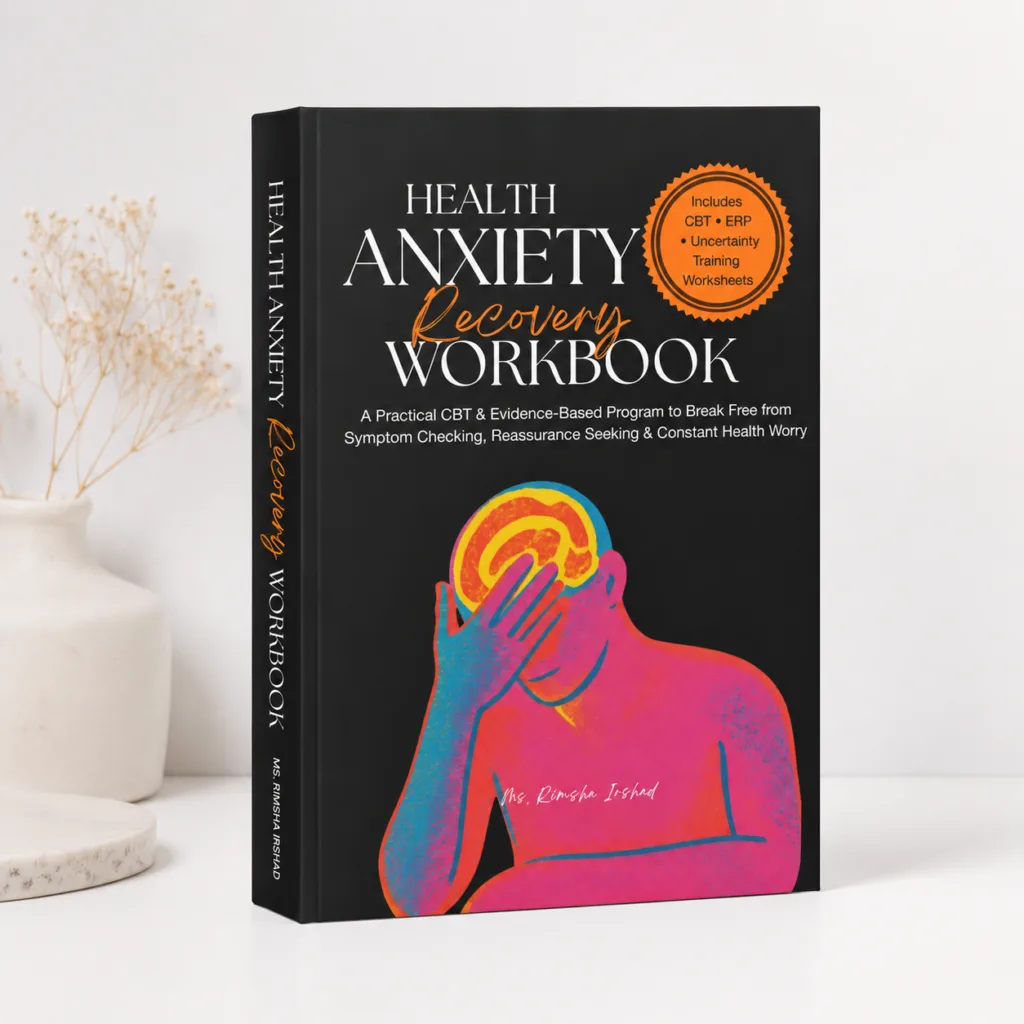
Health Anxiety Recovery Workbook
Original price was: $25.$15Current price is: $15.
Recent Posts

How to Stop Constant Symptom Checking
Table Of Content Why the Need to Check Becomes a Loop Imagine waking up with a faint headache. You glance at the ceiling, wonder if it could be a sign of something serious, and then you reach for your phone…

Why Avoidance Makes Anxiety Worse
Table of Contents What It Feels Like to Keep Getting Out of the Way Imagine you have a social gathering coming up. The thought of walking into a room full of strangers makes your stomach tighten, your heart pick up…

Exposure Therapy for Anxiety Explained
Table Of Contents What Exposure Therapy Feels Like in the Moment Imagine that a gentle ripple of dread appears whenever you think about attending a social gathering. Your stomach tightens, thoughts race, and you start rehearsing every possible slip‑up. You…

How to Create an Exposure Hierarchy
Table of Contents Feeling trapped by fear Imagine that a simple thought—“What if I can’t speak up in the meeting?”—sets off a cascade of physical sensations: a tight chest, a racing heartbeat, a knot in the throat. You might find…

Why Reassurance Seeking in Health Anxiety Keeps You Stuck
Table Of Content What Reassurance Seeking Feels Like Imagine you’ve just felt a flutter in your chest after a stressful meeting. Your first impulse is to check your pulse, then Google the symptom, then call a friend for “just in…

How to Challenge Catastrophic Thinking
Table of Contents Seeing the Storm Inside: What Catastrophic Thinking Feels Like Imagine a moment when a simple mistake—like missing a deadline—triggers a cascade of thoughts: “If I miss this, I’ll lose my job, won’t be able to pay the…

Worry Time Technique for Chronic Worry
Table Of Contents When the Mind Won’t Shut Off: A Close Look at Chronic Worry Imagine lying in bed after a long day. The lights are dim, the house is quiet, and instead of feeling relief, a familiar loop begins:…

Cognitive Defusion Techniques for Anxiety
Table of Contents When a Thought Feels Like a Storm Imagine sitting at a coffee shop and, out of nowhere, a wave of worry crashes over you: “What if I’m not good enough? What if I mess up this presentation?”…

Intolerance of Uncertainty Training
Table Of Contents Feeling Stuck in the “What‑If” Loop Imagine sitting at your kitchen table, a simple decision—whether to order take‑out or cook at home—suddenly feels like a looming crisis. Your mind races through countless outcomes: “What if the food…

How to Create an Exposure Hierarchy
Table of Contents Feeling trapped by fear Imagine that a simple thought—“What if I can’t speak up in the meeting?”—sets…

Why Avoidance Makes Anxiety Worse
Table of Contents What It Feels Like to Keep Getting Out of the Way Imagine you have a social gathering…

Cognitive Defusion Techniques for Anxiety
Table of Contents When a Thought Feels Like a Storm Imagine sitting at a coffee shop and, out of nowhere,…

How to Challenge Catastrophic Thinking
Table of Contents Seeing the Storm Inside: What Catastrophic Thinking Feels Like Imagine a moment when a simple mistake—like missing…

Exposure Therapy for Anxiety Explained
Table Of Contents What Exposure Therapy Feels Like in the Moment Imagine that a gentle ripple of dread appears whenever…

Intolerance of Uncertainty Training
Table Of Contents Feeling Stuck in the “What‑If” Loop Imagine sitting at your kitchen table, a simple decision—whether to order…
Don’t miss a single insight — Subscribe Now.
Our Publishing Standards
Evidence-based, clinically reviewed, and ethically published mental wellness education.
Editorial standards last reviewed: August 2026
Editorial Standards
Content is created using trauma-informed, compassionate, and psychologically responsible communication principles designed for clarity, emotional safety, and practical understanding.
Evidence & Research Policy
Articles are informed by evidence-based psychological frameworks, trusted medical resources, peer-reviewed research, and established mental wellness literature whenever appropriate.
AI-Assisted Content Policy
AI tools may assist with drafting or structural organization. Every article is carefully reviewed, edited, fact-checked, and refined by a certified clinical psychologist before publication.
Source & Citation Standards
We prioritize reputable academic, psychological, clinical, and educational sources to support accuracy, reader trust, and responsible mental wellness education.
Clinical Review Process
Published content undergoes editorial review by Rimsha Irshad, a Licensed Clinical Psychologist (MSc Clinical Psychology, Advanced Diploma in Clinical Psychology) with 6+ years of trauma-informed and CBT clinical experience, before being made publicly available.